
Industry Insights
November 10, 2026
AI Model Training Data for Autonomous Driving: Key to Safe Self-Driving
The race to deploy safe, scalable autonomous driving (AD) and ADAS hinges on one non-negotiable pillar: high-quality AI model training data for autonomous driving. Without accurate, diverse, compliant, and well-annotated datasets, even the most advanced neural networks cannot reliably perceive, predict, and navigate real-world driving scenarios. From urban rush hour to rural backroads, from bright daylight to low-light rain, training data defines how well self-driving models understand and react to the world around them.
In this post, we break down why AI training data is mission-critical for autonomous vehicles, what components matter most, and how end-to-end solutions like BodenAI streamline the entire data pipeline to power robust AD/ADAS development.
Why AI Model Training Data for Autonomous Driving Is Irreplaceable
Autonomous driving models are data-hungry by design. They must learn to:
- Detect vehicles, pedestrians, cyclists, traffic signs, and obstacles
- Interpret lane markings, traffic lights, and complex road geometries
- Predict motion patterns and avoid collisions
- Adapt to weather, lighting, and regional driving behaviors
Generic datasets fail here. Effective AI model training data for autonomous driving must be domain-specific, multi-sensor, edge-case rich, and privacy-compliant—qualities only purpose-built data pipelines can deliver.
Core Components of High-Performance Autonomous Driving Training Data
Let’s break down the essential building blocks that separate production-grade training data from low-quality alternatives.
Data Collection & Processing: Build Diverse, Reliable Datasets
The foundation of any AI model is clean, comprehensive raw data.Effective AD training starts with capturing diverse driving scenarios—urban, highway, suburban, extreme weather, low light, and dense traffic—to ensure model generalization.
Advanced preprocessing and data fusion remove noise, fix inconsistencies, and align multi-sensor inputs, creating stable datasets that accelerate algorithm convergence. This step turns raw footage and sensor feeds into AI-ready training data for autonomous driving models.
Data Anonymization: Compliance Without Compromise
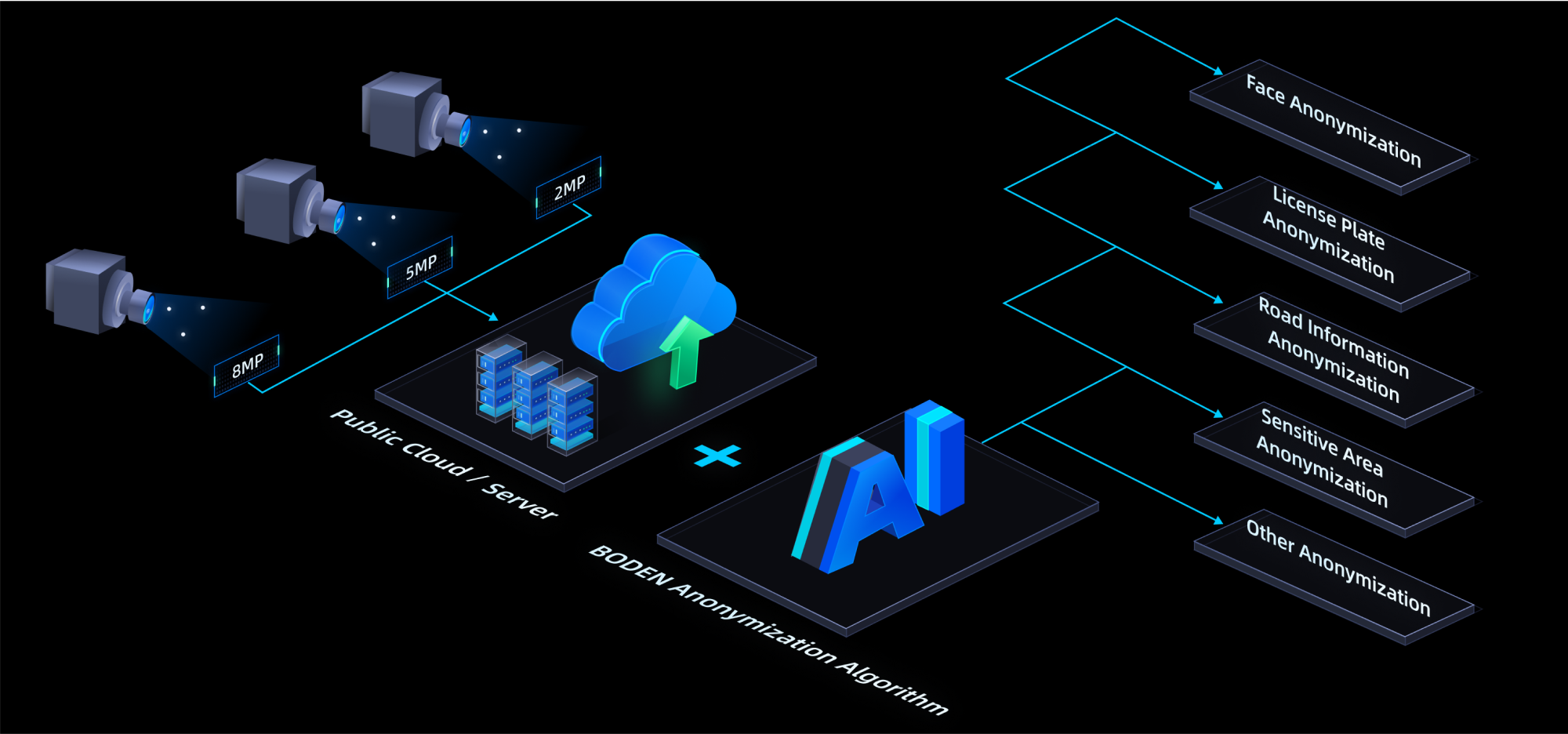
Privacy and regulatory compliance (GDPR, CCPA, local data laws) are non-negotiable for real-world deployment.Leading solutions use high-precision anonymization models to automatically redact sensitive information such as:
- License plates
- Facial features
- Personal identifiable information (PII)
Modern anonymization supports flexible deployment: on-vehicle edge devices, cloud platforms, and private on-premises environments—keeping data secure while maintaining training utility.
Sensor Calibration: Ensure Multi-Modal Alignment
Autonomous vehicles rely on LiDAR, surround-view cameras, peripheral cameras, and millimeter-wave radars. If these sensors are poorly calibrated, even perfect annotations produce unreliable model outputs.
Professional calibration environments use high-precision targets and alignment tools to support:
- Single-sensor calibration
- Multi-sensor fusion calibration
Well-calibrated sensors deliver consistent spatial and temporal alignment, drastically improving the quality of AI model training data for autonomous driving.
Precision Data Annotation: Labeling That Teaches Models to “See”
Annotation is where raw data becomes actionable training signal. For autonomous driving, accuracy directly equals safety.
Key annotation types include:
- 2D/3D bounding boxes
- Semantic segmentation
- Key point annotation
- LiDAR point cloud labeling
- Polyline and lane marking annotation
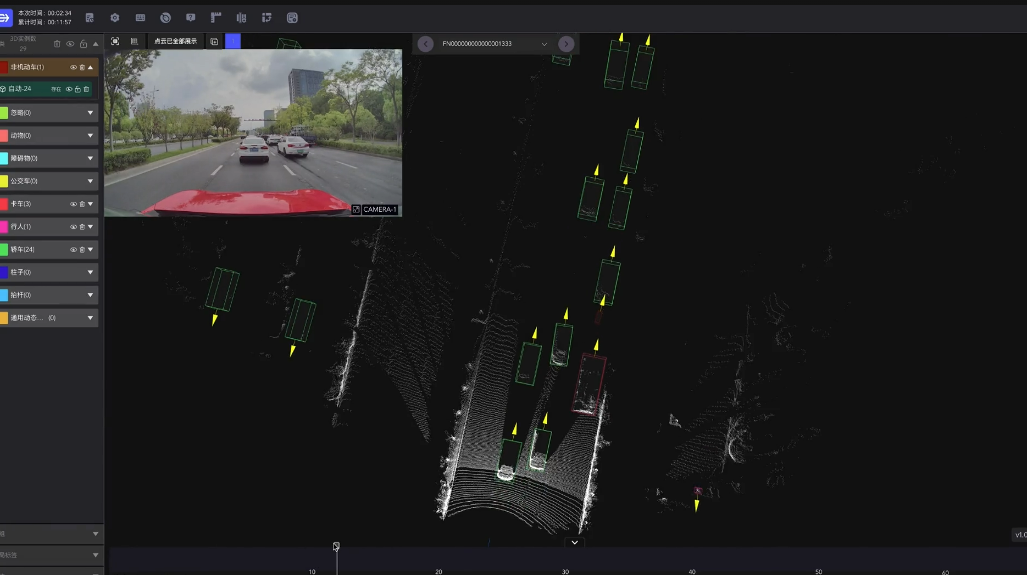
Dedicated platforms like BodenAI’s BASE annotation platform combine automation and expert review to maximize speed and precision, giving models the clarity they need to make real-time driving decisions.
Simulation, Testing & Ground Truth Validation
Training doesn’t stop at annotation. Models require rigorous validation to measure real-world performance.Specialized systems—such as online ground truth evaluation for Intelligent Speed Assistance (ISA)—provide objective metrics to identify weaknesses, guide fine-tuning, and validate that AI training data for autonomous driving translates to safe on-road behavior.
The End-to-End Advantage: Streamlined Training Data Workflows
Fragmented tools and disjointed workflows slow down AV development and introduce quality risks. A fully integrated toolchain—from data collection to annotation, anonymization, calibration, simulation, and validation—eliminates friction and ensures consistency across the entire pipeline.
This is exactly the approach used by BodenAI in autonomous driving solutions. Our full-stack workflow covers every stage of preparing AI model training data for autonomous driving, helping teams build better models faster while meeting strict industry and regulatory standards.
How to Optimize Your AI Model Training Data for Autonomous Driving
Follow these best practices to maximize model performance:
- Prioritize scenario diversity: cover day/night, weather, road types, and edge cases.
- Enforce strict anonymization and compliance from day one.
- Calibrate sensors early and often to maintain multi-modal alignment.
- Use precision annotation with human-in-the-loop validation.
- Validate with ground truth systems to close the loop on model improvement.
Final Thoughts
AI model training data for autonomous driving is not a backend detail—it’s the core technology that determines whether self-driving systems operate safely, reliably, and at scale. Every breakthrough in perception, prediction, and planning starts with clean, diverse, compliant, and accurately labeled data.
Whether you’re developing L2 ADAS or full-stack L4 autonomy, investing in a purpose-built data pipeline will reduce iteration time, lower safety risks, and speed up path-to-production.
To explore a complete, enterprise-grade solution built specifically for autonomous driving data workflows, schedule a free demo with us.