
Industry Insights
November 27, 2026
Embodied Robotics Data Pipeline: From Collection to Training
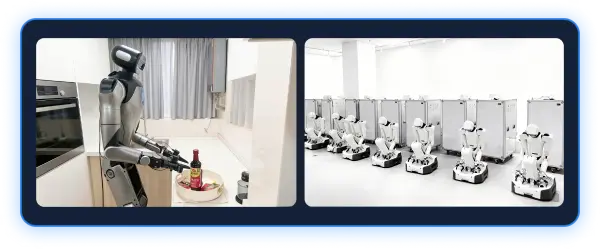
As robots move from controlled laboratory environments into factories, warehouses, and everyday spaces, one challenge is becoming increasingly difficult to ignore: collecting enough high-quality data to teach machines how to interact with the physical world.
Unlike large language models, which can learn from enormous collections of existing text, embodied AI models need information about physical interactions. A robot must learn not only what an object looks like, but also how it moves, how much force is required to manipulate it, and how its actions change the surrounding environment.
This makes an embodied robotics data pipeline a fundamental part of Physical AI development. It connects real-world data collection, multimodal processing, annotation, dataset construction, and model evaluation into a continuous learning workflow.
For robotics developers and research institutions building embodied intelligence systems, BodenAI provides unified Physical AI data infrastructure covering data collection, curation, annotation, and management. Through BRIC, BASE, and BLINK, teams can build more structured workflows for transforming physical-world interactions into training-ready data. Explore BodenAI's Physical AI data infrastructure.
Why Robotics Development Needs a Different Data Pipeline
The data requirements of robotics are fundamentally different from those of conventional AI applications.
A language model can learn relationships between words from static text. A robot, however, needs to understand the relationship between perception, movement, physical contact, and task outcomes.
Consider a robot learning to pick up a cup. Its training data may include camera recordings, gripper positions, joint trajectories, force measurements, object coordinates, and action commands. These signals describe different aspects of the same physical interaction and must remain connected throughout the data pipeline.
Recent robotics research and industry developments highlight three important challenges.
First, real-world interaction data remains difficult to collect at scale. Human demonstrations and teleoperation can provide valuable training examples, but capturing reliable robot trajectories requires appropriate hardware, calibration, and consistent recording procedures.
Second, visual information alone may not adequately describe physical interactions. Research into tactile robotics datasets highlights how touch-related signals, including contact, pressure, and slippage, can improve dexterous manipulation.
Third, data diversity matters as much as volume. A model trained on repetitive demonstrations in controlled environments may struggle with unfamiliar objects, different robot configurations, or unexpected environmental conditions.
These challenges make a robotics data pipeline more than a storage or annotation workflow. It must preserve the physical context of each interaction while making data usable across different training tasks.
Six Stages of an Embodied Robotics Data Pipeline
Collect Data from Real-World Robot Interactions
Data collection establishes the foundation of the entire pipeline.
Robotics teams can gather training data through autonomous robot operations, teleoperation, human demonstrations, and instrumented environments. Depending on the task, collection systems may capture RGB and depth images, LiDAR, IMU measurements, joint states, end-effector poses, force signals, and tactile observations.
The collection strategy should reflect the capabilities the model needs to learn.
For example, navigation models require diverse environmental observations and movement trajectories. Manipulation models need examples of grasping, object displacement, contact, and recovery behaviors.
Human demonstrations can also provide useful information about everyday physical activities. However, human movement recordings should not automatically be treated as equivalent to robot action trajectories. Differences in embodiment, kinematics, sensor placement, and control systems must be considered before these data sources are combined.
A well-designed collection process therefore captures both the interaction itself and the metadata needed to interpret it later.
Ingest and Synchronize Multimodal Data
Once data has been collected, different sensor streams need to be brought into a consistent processing environment.
This is one of the most technically demanding stages of robotics data engineering.
Cameras, tactile sensors, IMUs, and robot controllers may operate at different sampling frequencies. Their recordings may also use different timestamps, coordinate frames, and file formats.
Without accurate synchronization, a camera frame could become associated with the wrong robot action or contact event, creating misleading training examples.
A reliable ingestion process should preserve timestamps, calibrate coordinate relationships, align corresponding sensor streams, and retain robot and environment metadata.
For research teams working with multiple robot platforms, consistent data representation is especially important. It makes datasets easier to compare, reuse, and combine across experiments.
Curate Data for Quality and Diversity
More data does not automatically produce better robot models.
Collected trajectories may contain sensor interruptions, incomplete tasks, duplicated recordings, unstable movements, or inconsistent metadata. These issues need to be identified before datasets are used for training.
Quality control should evaluate recording completeness, trajectory validity, sensor consistency, task boundaries, and annotation reliability.
However, failed robot interactions should not always be discarded.
A failed grasp, unexpected collision, or unsuccessful navigation attempt may reveal precisely the conditions a model has not learned to handle. Preserving meaningful failure data can help researchers understand model limitations and develop more robust policies.
The objective is to build datasets that represent a broad range of physical conditions rather than simply accumulating repetitive demonstrations.
Annotate Actions, States, and Physical Interactions
Raw sensor data describes what happened, but annotation helps explain what the robot was doing and why an interaction matters.
Depending on the training objective, annotation may include object recognition, task segmentation, action labeling, trajectory interpretation, contact events, and task outcomes.
For vision-language-action models, visual observations need to be associated with language instructions and corresponding actions. For imitation learning, demonstrations must preserve meaningful action sequences and task boundaries.
Tactile data introduces another consideration. Contact, pressure, and slippage signals have different characteristics from image or video data. They require appropriate representation and alignment rather than being treated as ordinary visual annotations.
BodenAI's BASE annotation tools support multiple data types, including visual, LiDAR, audio, text, and trajectory data, helping teams organize diverse information within their data workflows.
Organize and Manage Training Datasets
As robotics projects expand, datasets become increasingly difficult to manage.
Different teams may collect data from multiple robot embodiments, environments, tasks, and sensor configurations. Without consistent organization, it becomes difficult to identify suitable training samples or reproduce previous experiments.
A scalable data management workflow should support dataset versioning, metadata tracking, provenance management, access control, and structured search.
It should also make it possible to organize datasets according to task types, robot configurations, environments, and interaction outcomes.
BodenAI's BLINK data management system helps connect data workflows and organize the resources required for ongoing Physical AI development.
For universities and research institutions, this structure supports reproducible experiments. For commercial robotics developers, it makes large-scale data operations easier to maintain as projects move toward deployment.

Connect Model Evaluation with New Data Collection
A robotics data pipeline should not stop when training data is delivered.
Model evaluation can reveal gaps that are difficult to identify during initial collection. A robot may perform well when handling familiar objects but struggle with deformable materials, partial occlusion, unexpected contact, or unfamiliar environments.
These results should guide the next round of data collection.
For example, if a manipulation policy repeatedly fails when grasping slippery objects, the team can collect targeted demonstrations involving different surface materials, grasp positions, and contact conditions.
Simulation can complement this process by generating controlled scenarios that are expensive or difficult to reproduce in physical environments. Real-world testing is still necessary to determine whether learned behaviors transfer successfully.
The resulting workflow becomes:
Real-World Data Collection → Processing → Curation → Annotation → Dataset Construction → Model Training → Evaluation → Targeted Data Collection
This feedback loop makes the pipeline an ongoing part of model development rather than a one-time dataset production process.
Building a Scalable Physical AI Data Foundation with BodenAI
The future of embodied robotics will depend on how effectively developers can turn physical-world experience into reusable training resources.
BodenAI approaches this challenge through a unified data infrastructure designed for Physical AI applications.
Its platform connects several essential capabilities:
- BRIC: High-performance data acquisition utilities for physical-world and robot data collection.
- BASE: Multimodal annotation tools for visual, LiDAR, audio, text, and trajectory data.
- BLINK: A data management system for organizing and managing data workflows.
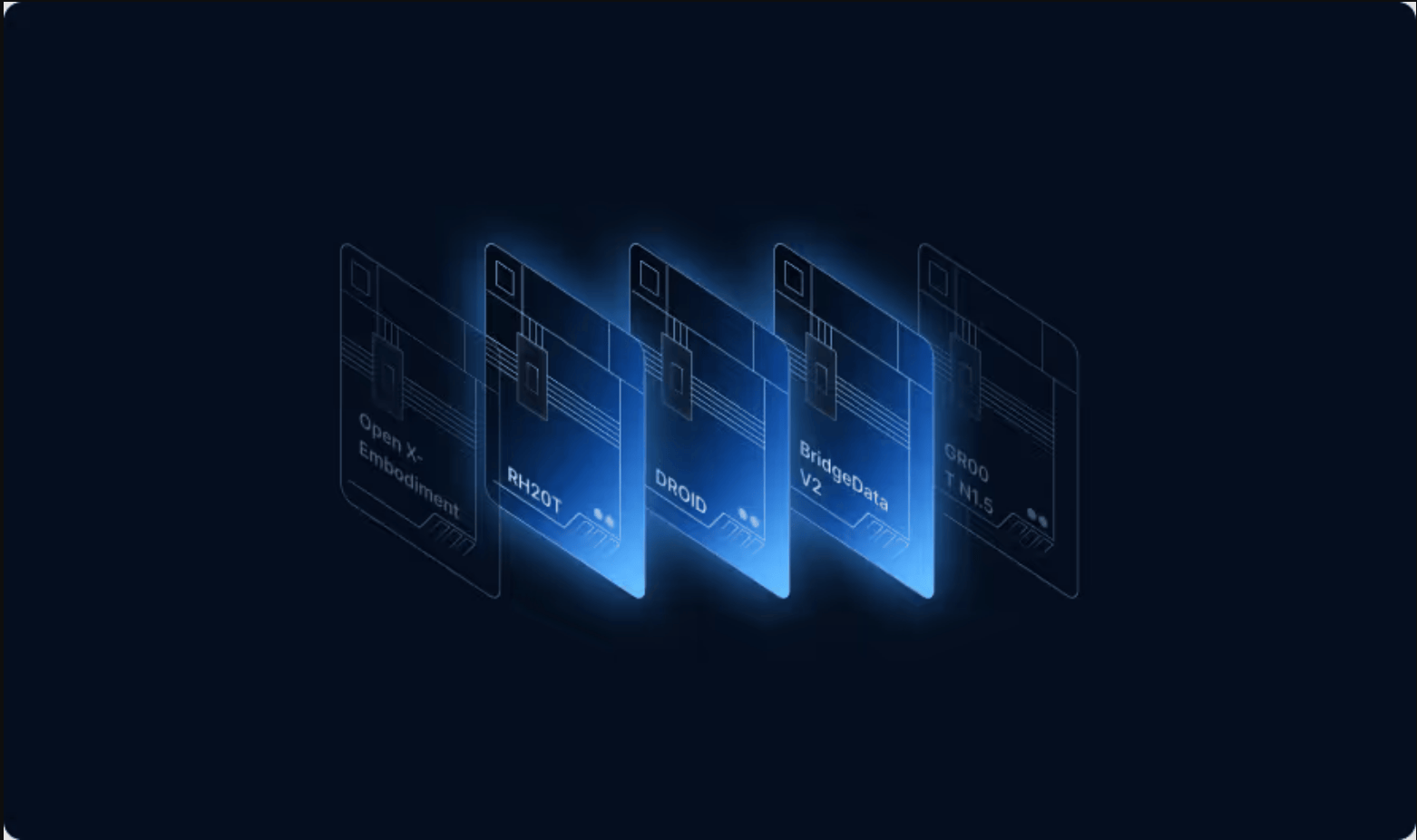
- Production-grade datasets: Diverse robotics data resources designed to support embodied AI training and research.
By connecting data acquisition, curation, annotation, and management, BodenAI helps robotics teams establish a more consistent foundation for dataset development and model iteration.
Whether you are developing humanoid robots, robotic manipulation systems, autonomous platforms, or embodied foundation models, a structured data pipeline can help reduce fragmented workflows and make training resources more reusable.
Contact BodenAI to discuss your Physical AI data infrastructure requirements.
Meet BodenAI at CES 2027
The growing importance of robotics and Physical AI is also reflected in major technology industry events.
CES 2027 will take place from January 6–9, 2027, in Las Vegas. As a global technology event covering artificial intelligence, robotics, sensors, and emerging technologies, CES provides an opportunity for technology developers, research organizations, and industry professionals to exchange ideas and explore new applications.
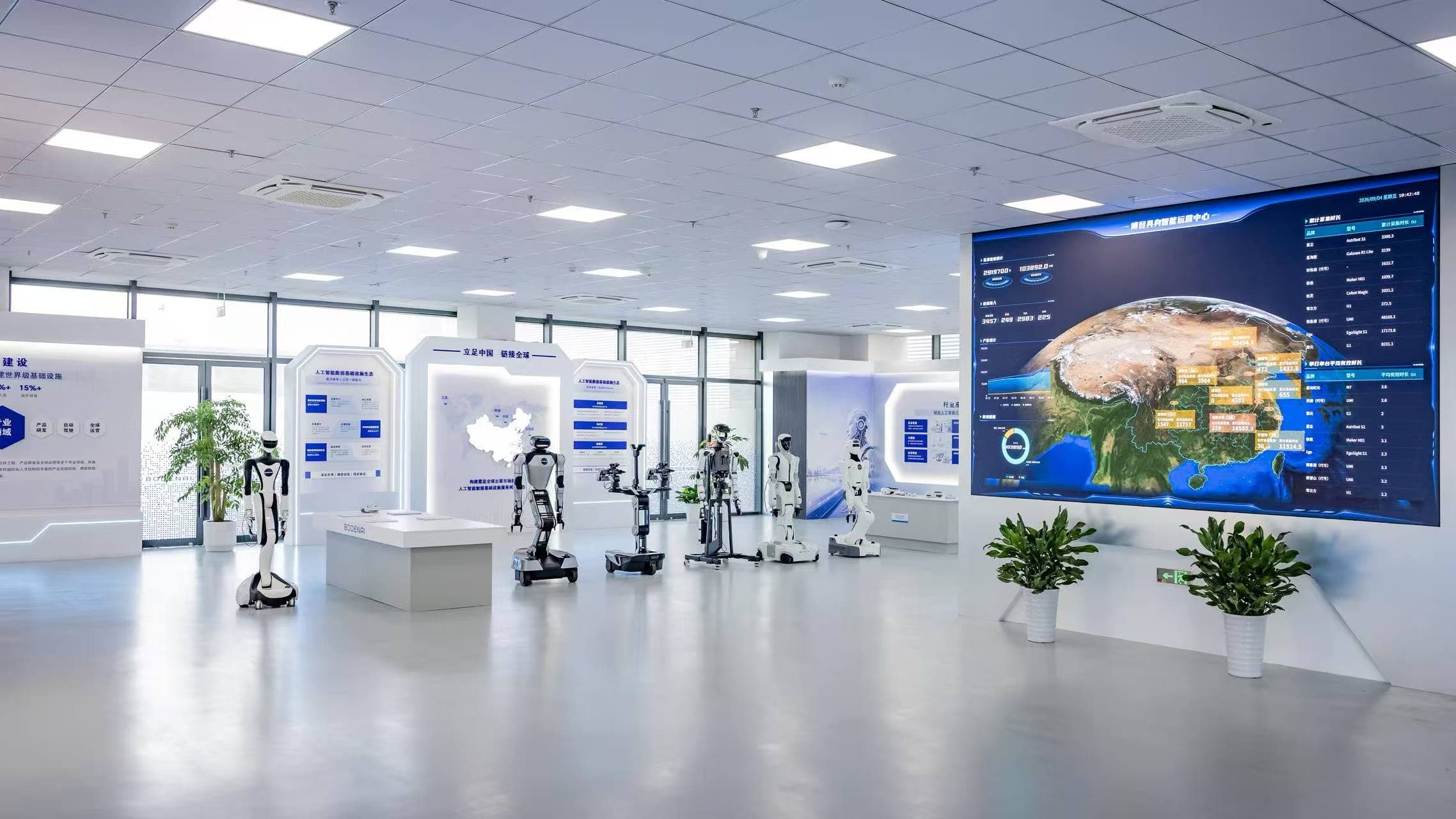
BodenAI will participate in CES 2027, where our team looks forward to connecting with robotics developers, research institutions, and industry partners to discuss real-world data collection, embodied AI training datasets, and scalable Physical AI data infrastructure.
As intelligent robots move closer to practical deployment, building the right data foundation will become increasingly important.
Let's connect at CES 2027 and explore how better data infrastructure can accelerate the next generation of Physical AI.