
Industry Insights
September 18, 2026
Engineering an Egocentric Data Collection Platform for Physical AI
.jpeg)
For Physical AI systems, the challenge is no longer simply collecting more data. The harder problem is building a data acquisition system that can consistently capture the right perspective, the right modalities, the right temporal relationships, and the right task context at production scale.
This is where an egocentric data collection platform becomes critical.
At BodenAI, we treat egocentric data collection as an infrastructure problem rather than a video-recording problem. The objective is to transform first-person interaction trajectories into structured, synchronized, quality-controlled datasets that can directly support robot learning, VLA training, imitation learning, reinforcement learning, and Physical AI model iteration.
The platform layer has to connect data acquisition with downstream annotation, validation, dataset management, and model development. Otherwise, increasing collection volume simply increases the amount of unstructured data that engineering teams need to process later.
Why Egocentric Data Requires a Different Data Architecture
Egocentric data is inherently tied to the agent's interaction with the physical environment.
For robot learning, the value of a trajectory does not come from RGB frames alone. A useful episode may contain synchronized visual observations, robot states, motion trajectories, hand or end-effector information, depth, force or tactile signals, task metadata, and event-level annotations.
More importantly, these streams need to preserve their temporal relationships.
A manipulation trajectory can be represented conceptually as:
Observation → State → Action → Contact → Environment Response → Next Observation
If the timestamps between these components drift, or if sensor streams are independently recorded without a reliable synchronization mechanism, the resulting dataset can lose much of its value for policy learning.
This is why we design egocentric data collection around the trajectory as the fundamental data unit, rather than treating individual frames as independent samples.
From Raw Capture to Structured Interaction Trajectories
A production-grade egocentric data collection platform needs to answer a more technical question:
What exactly should be captured during an interaction, and how should that interaction be represented downstream?
For example, a robot manipulating an object may generate:
- RGB or stereo visual streams
- Depth information
- Joint states
- End-effector pose
- Gripper state
- Motion trajectories
- Force or tactile information
- Environment metadata
- Task identifiers
- Action segments
- Success or failure states
The challenge is not merely storing these streams.
The platform needs to establish a common data model so that different modalities can be associated with the same interaction episode.
This becomes particularly important when datasets are collected across different robot configurations or capture environments. Without standardized schemas and acquisition protocols, each new hardware configuration can create another isolated data pipeline.
Our approach is therefore to make the acquisition layer configurable while keeping the underlying data structure consistent.
That allows new collection requirements to be introduced without rebuilding the entire production pipeline.
Temporal Synchronization Is a Core Requirement
For egocentric robot data, synchronization is not a secondary engineering detail.
Consider a manipulation sequence where:
- the camera records the object approaching the gripper,
- joint sensors record arm movement,
- the end-effector records its pose,
- a tactile sensor detects contact.
These signals describe the same physical event from different sensing channels.
The training value depends on knowing when those events occurred relative to one another.
A small synchronization error may be tolerable for some perception tasks. It becomes much more problematic when the objective is to learn precise action-conditioned behavior.
For this reason, an egocentric data collection platform should provide:
Unified timestamps
Every modality should be traceable to a consistent temporal reference.
Sensor alignment
Visual, motion, state, and interaction signals need to remain aligned throughout an episode.
Episode integrity
The system should detect missing, interrupted, or corrupted streams before they enter the training dataset.
Hardware-aware acquisition
Different robotic platforms can expose different state spaces, sensor frequencies, coordinate systems, and communication protocols. The acquisition layer must account for these differences rather than assuming a uniform hardware interface.
Our BRIC ROBO architecture is designed around this type of heterogeneous robot data acquisition, including robot registration, streaming protocol integration, joint-space mapping, and sensor alignment.
Data Quality Must Start During Collection
A common mistake in large-scale Physical AI projects is to treat quality control as an annotation-stage problem.
By that point, however, low-quality data has already consumed collection resources, storage, transfer bandwidth, and processing capacity.
For egocentric data, quality should be evaluated as close to the point of capture as possible.
We typically consider several dimensions.
Capture Quality
The system should identify abnormal frames, dropped streams, exposure problems, occlusion, sensor interruptions, and other acquisition-level anomalies.
Trajectory Completeness
An episode should contain the required sequence from initial state through action and outcome. Incomplete trajectories can introduce ambiguity into policy learning.
Sensor Consistency
Different streams need to satisfy predefined sampling, synchronization, and format requirements.
Task Validity
The captured trajectory needs to correspond to the intended task specification rather than merely being technically valid sensor data.
Interaction Validity
For manipulation datasets, critical events such as grasping, contact, object displacement, release, and failure states may need to be explicitly represented.
This approach changes the role of quality control from post-processing inspection to data production governance.
Dynamic Data Templates for Egocentric Collection
Egocentric datasets evolve rapidly during Physical AI development.
Early-stage research may require a relatively small number of modalities. Once model evaluation exposes a specific failure mode, additional data fields or collection conditions may become necessary.
For example, a manipulation project may initially focus on RGB and robot state. Later iterations may require:
- higher-frequency motion data,
- additional depth information,
- hand or end-effector trajectories,
- failure-state labels,
- object-state transitions,
- environmental metadata.
A rigid acquisition system makes these changes expensive.
We therefore emphasize dynamic and configurable data templates.
The data schema should be capable of evolving without forcing the entire collection workflow to be redesigned. This principle is also reflected in the BodenAI platform's configurable template architecture and modular workflow design.
Egocentric Data Should Be Designed for Downstream Learning
Collection and annotation cannot be separated completely.
The structure of the collected data determines what can be efficiently annotated later.
For example, if a dataset is intended for manipulation policy learning, it may be useful to preserve action boundaries and interaction events during collection. If the dataset is intended for multimodal foundation-model training, richer temporal and semantic metadata may be required.
This creates an important engineering principle:
The collection schema should be designed backward from the model-training objective.
Instead of asking only:
“What sensors can we collect?”
we should ask:
“What information will the model need to learn the target behavior?”
That determines the appropriate modalities, sampling rates, trajectory structure, metadata, and annotation granularity.
At BodenAI, we build the data workflow around this connection between acquisition, annotation, validation, and downstream model development rather than treating each stage as an independent system. Our platform integrates data collection, annotation, workflow orchestration, and data management within a unified architecture.
Scaling From Individual Demonstrations to Production Data
The engineering difficulty changes significantly once egocentric collection moves beyond research-scale experiments.
At production scale, the system needs to manage thousands or potentially millions of episodes while maintaining consistency across:
- Collection devices
- Robot configurations
- Operators
- Environments
- Task definitions
- Data schemas
- Quality standards
- Dataset versions
This requires orchestration rather than simple data storage.
A scalable workflow should allow collection tasks to be configured, distributed, monitored, validated, reviewed, and released through a controlled process.
This is particularly important when data is collected continuously.
A mature Physical AI data pipeline should support a loop such as:
Task Definition → Data Collection → Automated Validation → Annotation → Quality Review → Dataset Release → Model Training → Evaluation → New Collection Requirements
The output of model evaluation should feed back into data collection.
This creates a closed-loop data engine rather than a one-directional dataset production process.
Egocentric Data for Humanoid and Manipulation Systems
Egocentric collection becomes especially valuable when the target system operates through complex physical interactions.
Humanoid robots and general-purpose manipulation systems need to deal with long-horizon tasks where the significance of an action depends on previous states.
A single frame rarely describes the complete task.
The useful unit is the temporal interaction sequence.
For example, the system may need to learn that:
- an object is first approached from a particular spatial configuration;
- the hand or end-effector changes orientation before contact;
- contact modifies the object's state;
- the subsequent movement depends on the new object state;
- the final action is determined by the task objective.
This makes sequence-level data organization essential.
Egocentric collection therefore provides more than a different camera angle. Properly engineered, it provides a representation of how an agent perceives and acts through time.
That representation can become an important training signal for models that need to connect perception with physical action.
Building a Unified Physical AI Data Infrastructure
We do not view an egocentric data collection platform as an isolated product layer.
It is one component of a larger Physical AI data infrastructure.
The complete system needs to connect:
Data Acquisition
↓
Multimodal Synchronization
↓
Data Validation
↓
Annotation & Curation
↓
Dataset Management
↓
Model Training
↓
Evaluation & Failure Analysis
↓
Targeted Data Re-collection
The key is maintaining data lineage throughout this process.
A training sample should remain traceable to its original acquisition episode, task definition, sensor configuration, quality-control results, annotation version, and dataset release.
This becomes increasingly important as datasets scale and models undergo repeated iterations.
The BodenAI platform is designed around this unified architecture, with capabilities spanning multimodal data collection, data validation, configurable workflows, annotation, and lifecycle management.
See the full Physical AI data platform architecture
Our Experience With Real-World Embodied AI Data
Our work with Physical AI systems has reinforced one principle:
data collection cannot be optimized independently from model development.
Different robot embodiments, task structures, environments, and model objectives create different requirements for data acquisition.
This is why we have developed collection infrastructure that can adapt to heterogeneous robot platforms and complex physical interaction scenarios.
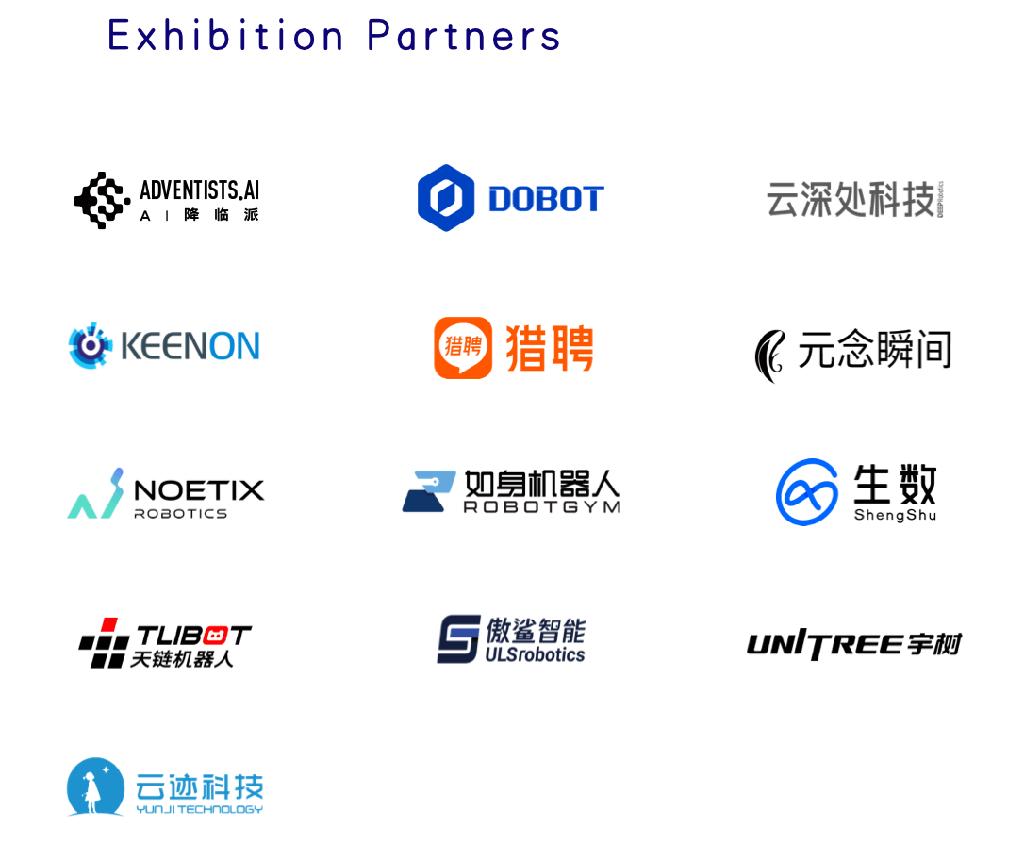
Our collaboration experience spans 15+ embodied AI companies and robotics partners, covering different robot embodiments, interaction scenarios, and data requirements. The partner projects shown above include Unitree, Midea, Keenon, Standard Robots, Leju Robot, DEEP Robotics, and NoemaTrix.
Rather than applying one fixed collection methodology to every project, we build the acquisition and data-processing workflow around the requirements of the target system.
This is particularly important for Physical AI because the data distribution is ultimately determined by the robot, environment, task, embodiment, and interaction dynamics.
What a Production-Grade Egocentric Data Platform Should Ultimately Provide
The long-term objective is not to build a larger video repository.
It is to establish a reliable physical experience data layer.
A production-grade egocentric data collection platform should make it possible to:
- Capture multimodal interaction trajectories
- Maintain precise temporal synchronization
- Standardize heterogeneous robot data
- Configure task-specific collection schemas
- Detect low-quality data early
- Preserve complete data lineage
- Connect collection with annotation and curation
- Support continuous dataset iteration
- Feed model evaluation back into new data collection
When these capabilities are connected, data collection becomes part of the model development infrastructure itself.
That is the direction we are pursuing at BodenAI: from raw physical-world signals to structured, validated, continuously improving training data for Physical AI.
Build the Next Generation of Egocentric Data Infrastructure
As Physical AI models move toward longer-horizon tasks and more general-purpose capabilities, the quality of the underlying experience data will increasingly determine how effectively models transfer from controlled experiments to real-world environments.
Egocentric data provides a valuable perspective into perception-action trajectories, but its real value emerges only when the entire data pipeline is engineered around synchronization, structure, quality, scalability, and continuous iteration.
For teams developing humanoid robots, manipulation systems, VLA models, or other Physical AI applications, we recommend designing the data architecture before scaling collection volume.
The right infrastructure can turn millions of raw sensor observations into a continuously improving dataset that directly supports model development.
Explore BodenAI's Physical AI Data Platform
If you are planning an egocentric data collection program and need to define capture architecture, multimodal synchronization, data schemas, quality-control mechanisms, or a scalable production workflow, our technical team can work with you to design the appropriate data infrastructure.