
Industry Insights
November 19, 2026
How to Build an Egocentric Data Processing Pipeline for Robot Training
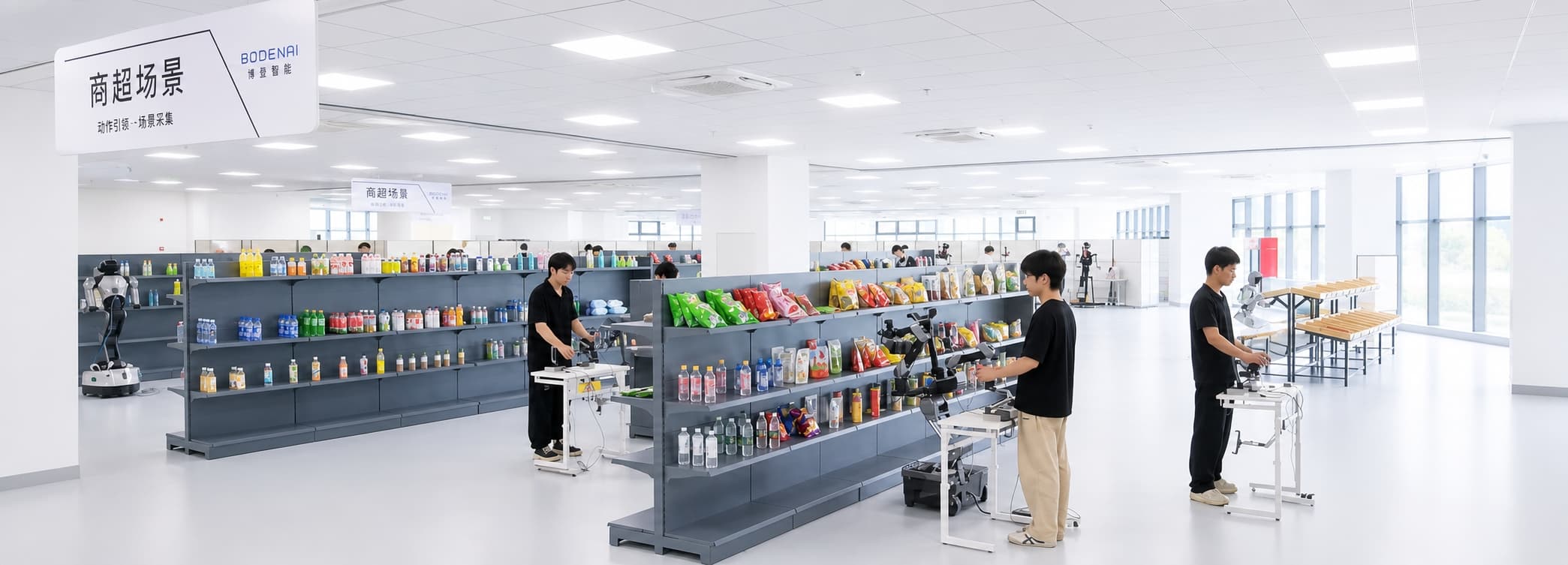
For a robot, seeing the world is only the beginning.
To pick up a cup, fold a piece of clothing, open a drawer, or navigate an unfamiliar environment, a robot needs to connect what it sees with what it does. It needs to understand how the scene changes as an action takes place and, ultimately, learn which actions lead to successful outcomes.
This is one reason egocentric data is becoming increasingly important in Physical AI.
First-person data gives models a view that is much closer to the perspective of the agent itself. It can capture what the robot or human operator sees, how objects move, how hands interact with objects, and how a task unfolds over time. But raw first-person recordings are not immediately useful for training. They need to be processed, organized, and connected with other physical-world signals.
That is where an egocentric data processing pipeline comes in.
For robotics companies and research teams building Physical AI models, the challenge is no longer simply collecting more data. The bigger question is how to turn large amounts of messy, multimodal experience into reliable training data.
BodenAI helps Physical AI teams build this data layer, from real-world data collection and processing to annotation, curation, and training-ready datasets. If your team is working on robot foundation models, VLA systems, humanoids, or other embodied AI applications, explore BodenAI's Physical AI solutions to see how a dedicated data infrastructure can support your development cycle.
What Makes Egocentric Data Different?
Traditional computer vision datasets often focus on what is visible in a scene. A camera captures an object, a person, or an environment, and the data is labeled accordingly.
Robotics requires something more.
Imagine a robot learning to make coffee. A useful training example is not simply an image showing a coffee cup. The model needs to understand the sequence: the cup is located on the counter, the robot moves toward it, the gripper approaches from a particular angle, contact occurs, the cup is lifted, and the task either succeeds or fails.
An egocentric recording can capture much of this experience from the agent's perspective.
This makes first-person data particularly useful for learning the relationship between perception, action, and outcome. BodenAI's previous research on ego-centric data for Physical AI and first-person data for robot training explores this shift in more detail.
The difficult part comes after the recording.
From Raw Recordings to Usable Training Data
An egocentric data processing pipeline typically begins with a collection of raw sensor streams rather than a neatly packaged dataset.
A single task may generate video, depth, robot states, trajectories, force or tactile signals, audio, and task instructions at the same time. Each source has its own format, sampling rate, and potential failure points.
Before a model can learn from this experience, these signals need to be brought together.
The first step is usually temporal synchronization. If the camera shows the robot touching an object at one moment while the corresponding robot-state data points to a different moment, the training example can become misleading.
This sounds like a small technical issue, but at scale it can have a significant impact on dataset quality. A model trained on poorly aligned observations and actions may learn correlations that do not actually exist in the physical world.
Once the different streams are synchronized, the raw data can be cleaned. Blurry frames, missing sensor readings, incomplete trajectories, corrupted recordings, and failed demonstrations all need to be identified. Not every minute of collected data deserves a place in the final training set.
The Real Value Comes From Context
After cleaning, the next challenge is understanding what actually happened in each sequence.
For a robotics dataset, annotation may involve objects, actions, task stages, trajectories, interaction events, success or failure states, and natural-language instructions. The exact requirements depend on what the model is expected to learn.
This is where an egocentric pipeline becomes more than a video-processing workflow.
Consider a simple manipulation sequence. The model may need to associate:
what the robot sees → what the robot is doing → how the object responds → whether the action worked
That connection between visual observations and physical actions is essential for modern Vision-Language-Action models and other Physical AI systems.
It also means that annotation quality cannot be evaluated only by asking whether an object was labeled correctly. The temporal relationship between observations and actions matters just as much.
Quality Matters More Than Raw Data Volume
It is tempting to measure a robotics dataset by the number of hours collected.
But 10,000 hours of highly repetitive or poorly synchronized recordings may be less useful than a much smaller dataset covering a broader range of meaningful physical situations.
A strong egocentric data processing pipeline therefore needs quality control at multiple levels.
At the individual sample level, teams may check sensor completeness, synchronization, annotation consistency, trajectory validity, and task outcomes.
At the dataset level, the questions become broader:
Does the data cover different environments? Different objects? Different embodiments? Different task variations? What about failure cases and unusual physical conditions?
These questions become increasingly important as robotics models move from controlled demonstrations toward real-world deployment.
For research teams, this also makes dataset curation part of the scientific process. A carefully structured dataset makes it easier to understand why a model performs well on one task and struggles on another.
Building a Data Loop for Physical AI
The best robotics data pipelines do not end when a dataset is delivered to a training team.
Model evaluation should feed information back into the data pipeline.
Suppose a robot performs well when objects are placed in predictable positions but struggles when the same task is performed under different lighting or from a different approach angle. That failure is not simply a model problem. It may reveal a gap in the training data.
The team can then collect or curate more examples around that specific failure mode.
Over time, the workflow becomes a continuous loop:
Real-world experience → Data processing → Training → Evaluation → Failure analysis → New data
This is particularly important for Physical AI because robots operate in environments that are difficult to fully represent through simulation or carefully controlled demonstrations.
The more capable the model becomes, the more important it is to have infrastructure that can continuously turn physical experience into structured learning data.
Why the Pipeline Needs to Scale With the Robot
A small robotics research project may be able to manage data manually.
That approach becomes much harder when a company is collecting data across multiple robots, environments, operators, sensor configurations, and task types.
At that point, the data pipeline needs to handle much more than annotation. Teams need consistent data specifications, multimodal synchronization, quality control, dataset versioning, metadata management, and repeatable curation workflows.
The goal is not simply to create one good dataset.
It is to create a system that allows the organization to repeatedly produce high-quality training data as the robot, model, and application evolve.
This is why data infrastructure is becoming an increasingly important part of the Physical AI stack. The model may be the visible part of a robotics system, but its performance ultimately depends on the quality and diversity of the physical experiences behind it.
Egocentric Data and the Next Wave of Robotics
The importance of this infrastructure is likely to become even more visible as robotics moves further into commercial applications.
At CES 2027, taking place January 6–9 in Las Vegas, robotics and AI are among the major areas featured in the conference program. CES describes itself as a global stage where technology companies, innovators, and business leaders come together, while its 2027 program includes a dedicated Robotics track.
The focus is also shifting toward real-world deployment. One CES 2027 Robotics session, for example, examines the growing deployment of humanoid robots and the operational factors driving adoption.
For the robotics industry, that shift raises a practical question: as robots become more capable, where will the data needed to train and improve them come from?
The answer will not be a single dataset or a single collection method.
It will require infrastructure capable of continuously capturing physical experience, processing multimodal data, preserving context, identifying quality issues, and delivering useful training datasets back to model development teams.
That is ultimately what an egocentric data processing pipeline should accomplish.
For robotics companies, universities, and research organizations working toward more capable Physical AI systems, the opportunity is not simply to collect more first-person data. It is to build a reliable path from physical experience to model-ready intelligence.
And that data layer may become just as important as the models trained on top of it.